

Re: PDF of Thelma Martin's Obituary Guidelines from Annual Meeting

WK
Wayne Kauffman
Wed, Apr 30, 2025 4:54 PM

In today's environment I would be very, very careful about mentioning the cause of death.  There are are enough inheritable genetic conditions which area a contributing factor in death which one would not want that information to be public. That could be used in a negative manner against any descendants of that individual.  One just needs to look to the privacy controls present at firms such as 23andMe, AncestryDNA, FTNDA to understand the regulatory and legal controls present on heritable information.   While one may say that using a generic term such as dementia, breast cancer, or Parkinsons is OK the assumed potential presence of inherited genes associated with the condition(s) in offspring could result in unexpected exclusionary actions by insurance or medical area firms.

Yes, it would be intellectually VERY interesting to trace back the family tree and look at family siblings passed in order to establish where specific bad traits were present and where they might be present in current generations.  Really how many of you would want to know which ancestor(s) apparently had the APO4e variant which increases the odds of acquiring Alzheimer's dementia as you age?  [Yes, you can confirm a good number of items via the existing crop of autosomal tests.]
Before mentioning a cause of death make sure that all descendants are in agreement that they want that information to be publicized.
Wayne Kauffman

On Wednesday, April 30, 2025 at 12:33:10 PM EDT, Wayne Kauffman <dna_wayne@yahoo.com> wrote:  

In today's environment I would be very, very careful about mentioning the cause of death.  There are are enough inheritable genetic conditions which area a contributing factor in death which one would not want that information to be public. That could be used in a negative manner against any descendants of that individual.  One just needs to look to the privacy controls present at firms such as 23andMe, AncestryDNA, FTNDA to understand the regulatory and legal controls present on heritable information.   While one may say that using a generic term such as dementia, breast cancer, or Parkinsons is OK the assumed potential presence of inherited genes associated with the condition(s) in offspring could result in unexpected exclusionary actions by insurance or medical area firms.

Yes, it would be intellectually VERY interesting to trace back the family tree and look at family siblings passed in order to establish where specific bad traits were present and where they might be present in current generations.  Really how many of you would want to know which ancestor(s) apparently had the APO4e variant which increases the odds of acquiring Alzheimer's dementia as you age?  [Yes, you can confirm a good number of items via the existing crop of autosomal tests.]
Before mentioning a cause of death make sure that all descendants are in agreement that they want that information to be publicized.
Wayne Kauffman

On Wednesday, April 30, 2025 at 11:41:35 AM EDT, James G. Hermsen via List <list@maillist.saga-omii.org> wrote:  

Hoosierly Yours,

James G. Hermsen
8108 Laura Lynne Lane
Indianapolis, IN 46217
317-881-4600 main
317-679-1466 cell
Question Critically, Think Logically, Communicate Clearly, Act Creatively, Live Ethically.


List mailing list -- list@maillist.saga-omii.org
To unsubscribe send an email to list-leave@maillist.saga-omii.org

In today's environment I would be very, very careful about mentioning the cause of death.  There are are enough inheritable genetic conditions which area a contributing factor in death which one would not want that information to be public. That could be used in a negative manner against any descendants of that individual.  One just needs to look to the privacy controls present at firms such as 23andMe, AncestryDNA, FTNDA to understand the regulatory and legal controls present on heritable information.   While one may say that using a generic term such as dementia, breast cancer, or Parkinsons is OK the assumed potential presence of inherited genes associated with the condition(s) in offspring could result in unexpected exclusionary actions by insurance or medical area firms. Yes, it would be intellectually VERY interesting to trace back the family tree and look at family siblings passed in order to establish where specific bad traits were present and where they might be present in current generations.  Really how many of you would want to know which ancestor(s) apparently had the APO4e variant which increases the odds of acquiring Alzheimer's dementia as you age?  [Yes, you can confirm a good number of items via the existing crop of autosomal tests.] Before mentioning a cause of death make sure that all descendants are in agreement that they want that information to be publicized. Wayne Kauffman On Wednesday, April 30, 2025 at 12:33:10 PM EDT, Wayne Kauffman <dna_wayne@yahoo.com> wrote: In today's environment I would be very, very careful about mentioning the cause of death.  There are are enough inheritable genetic conditions which area a contributing factor in death which one would not want that information to be public. That could be used in a negative manner against any descendants of that individual.  One just needs to look to the privacy controls present at firms such as 23andMe, AncestryDNA, FTNDA to understand the regulatory and legal controls present on heritable information.   While one may say that using a generic term such as dementia, breast cancer, or Parkinsons is OK the assumed potential presence of inherited genes associated with the condition(s) in offspring could result in unexpected exclusionary actions by insurance or medical area firms. Yes, it would be intellectually VERY interesting to trace back the family tree and look at family siblings passed in order to establish where specific bad traits were present and where they might be present in current generations.  Really how many of you would want to know which ancestor(s) apparently had the APO4e variant which increases the odds of acquiring Alzheimer's dementia as you age?  [Yes, you can confirm a good number of items via the existing crop of autosomal tests.] Before mentioning a cause of death make sure that all descendants are in agreement that they want that information to be publicized. Wayne Kauffman On Wednesday, April 30, 2025 at 11:41:35 AM EDT, James G. Hermsen via List <list@maillist.saga-omii.org> wrote: Hoosierly Yours, James G. Hermsen 8108 Laura Lynne Lane Indianapolis, IN 46217 317-881-4600 main 317-679-1466 cell Question Critically, Think Logically, Communicate Clearly, Act Creatively, Live Ethically. _______________________________________________ List mailing list -- list@maillist.saga-omii.org To unsubscribe send an email to list-leave@maillist.saga-omii.org
LJ
Loren Johns
Wed, Apr 30, 2025 5:04 PM

Wayne:

Your caution surprises me ... which makes me think I should take it
seriously and further ponder the implications of recording something.

I once encountered a death certificate that listed the cause of death as
"nothing serious."

Loren L. Johns
Stuart, Florida

"I will accept no bull from your house." --Ps. 50:9, RSV

On Wed, Apr 30, 2025 at 12:56 PM Wayne Kauffman via List <
list@maillist.saga-omii.org> wrote:

In today's environment I would be very, very careful about mentioning the
cause of death.  There are are enough inheritable genetic conditions which
area a contributing factor in death which one would not want that
information to be public. That could be used in a negative manner against
any descendants of that individual.  One just needs to look to the privacy
controls present at firms such as 23andMe, AncestryDNA, FTNDA to understand
the regulatory and legal controls present on heritable information.  While
one may say that using a generic term such as dementia, breast cancer, or
Parkinsons is OK the assumed potential presence of inherited genes
associated with the condition(s) in offspring could result in unexpected
exclusionary actions by insurance or medical area firms.

Yes, it would be intellectually VERY interesting to trace back the family
tree and look at family siblings passed in order to establish where
specific bad traits were present and where they might be present in current
generations.  Really how many of you would want to know which ancestor(s)
apparently had the APO4e variant which increases the odds of acquiring
Alzheimer's dementia as you age?  [Yes, you can confirm a good number of
items via the existing crop of autosomal tests.]

Before mentioning a cause of death make sure that all descendants are in
agreement that they want that information to be publicized.

Wayne Kauffman

On Wednesday, April 30, 2025 at 12:33:10 PM EDT, Wayne Kauffman <
dna_wayne@yahoo.com> wrote:

In today's environment I would be very, very careful about mentioning the
cause of death.  There are are enough inheritable genetic conditions which
area a contributing factor in death which one would not want that
information to be public. That could be used in a negative manner against
any descendants of that individual.  One just needs to look to the privacy
controls present at firms such as 23andMe, AncestryDNA, FTNDA to understand
the regulatory and legal controls present on heritable information.  While
one may say that using a generic term such as dementia, breast cancer, or
Parkinsons is OK the assumed potential presence of inherited genes
associated with the condition(s) in offspring could result in unexpected
exclusionary actions by insurance or medical area firms.

Yes, it would be intellectually VERY interesting to trace back the family
tree and look at family siblings passed in order to establish where
specific bad traits were present and where they might be present in current
generations.  Really how many of you would want to know which ancestor(s)
apparently had the APO4e variant which increases the odds of acquiring
Alzheimer's dementia as you age?  [Yes, you can confirm a good number of
items via the existing crop of autosomal tests.]

Before mentioning a cause of death make sure that all descendants are in
agreement that they want that information to be publicized.

Wayne Kauffman

On Wednesday, April 30, 2025 at 11:41:35 AM EDT, James G. Hermsen via List
list@maillist.saga-omii.org wrote:

Hoosierly Yours,

James G. Hermsen
8108 Laura Lynne Lane
Indianapolis, IN 46217

317-881-4600 main
317-679-1466 cell

Question Critically, Think Logically, Communicate Clearly, Act
Creatively, Live Ethically.


List mailing list -- list@maillist.saga-omii.org
To unsubscribe send an email to list-leave@maillist.saga-omii.org


List mailing list -- list@maillist.saga-omii.org
To unsubscribe send an email to list-leave@maillist.saga-omii.org
Wayne: Your caution surprises me ... which makes me think I should take it seriously and further ponder the implications of recording something. I once encountered a death certificate that listed the cause of death as "nothing serious." Loren L. Johns Stuart, Florida ----------------------------------------------------------------------- "I will accept no bull from your house." --Ps. 50:9, RSV On Wed, Apr 30, 2025 at 12:56 PM Wayne Kauffman via List < list@maillist.saga-omii.org> wrote: > In today's environment I would be very, very careful about mentioning the > cause of death. There are are enough inheritable genetic conditions which > area a contributing factor in death which one would not want that > information to be public. That could be used in a negative manner against > any descendants of that individual. One just needs to look to the privacy > controls present at firms such as 23andMe, AncestryDNA, FTNDA to understand > the regulatory and legal controls present on heritable information. While > one may say that using a generic term such as dementia, breast cancer, or > Parkinsons is OK the assumed potential presence of inherited genes > associated with the condition(s) in offspring could result in unexpected > exclusionary actions by insurance or medical area firms. > > Yes, it would be intellectually VERY interesting to trace back the family > tree and look at family siblings passed in order to establish where > specific bad traits were present and where they might be present in current > generations. Really how many of you would want to know which ancestor(s) > apparently had the APO4e variant which increases the odds of acquiring > Alzheimer's dementia as you age? [Yes, you can confirm a good number of > items via the existing crop of autosomal tests.] > > Before mentioning a cause of death make sure that all descendants are in > agreement that they want that information to be publicized. > > Wayne Kauffman > > > On Wednesday, April 30, 2025 at 12:33:10 PM EDT, Wayne Kauffman < > dna_wayne@yahoo.com> wrote: > > > In today's environment I would be very, very careful about mentioning the > cause of death. There are are enough inheritable genetic conditions which > area a contributing factor in death which one would not want that > information to be public. That could be used in a negative manner against > any descendants of that individual. One just needs to look to the privacy > controls present at firms such as 23andMe, AncestryDNA, FTNDA to understand > the regulatory and legal controls present on heritable information. While > one may say that using a generic term such as dementia, breast cancer, or > Parkinsons is OK the assumed potential presence of inherited genes > associated with the condition(s) in offspring could result in unexpected > exclusionary actions by insurance or medical area firms. > > Yes, it would be intellectually VERY interesting to trace back the family > tree and look at family siblings passed in order to establish where > specific bad traits were present and where they might be present in current > generations. Really how many of you would want to know which ancestor(s) > apparently had the APO4e variant which increases the odds of acquiring > Alzheimer's dementia as you age? [Yes, you can confirm a good number of > items via the existing crop of autosomal tests.] > > Before mentioning a cause of death make sure that all descendants are in > agreement that they want that information to be publicized. > > Wayne Kauffman > > > On Wednesday, April 30, 2025 at 11:41:35 AM EDT, James G. Hermsen via List > <list@maillist.saga-omii.org> wrote: > > > > > Hoosierly Yours, > > *James G. Hermsen* > 8108 Laura Lynne Lane > Indianapolis, IN 46217 > > 317-881-4600 main > 317-679-1466 cell > > *Question Critically, Think Logically, Communicate Clearly, Act > Creatively, Live Ethically.* > _______________________________________________ > List mailing list -- list@maillist.saga-omii.org > To unsubscribe send an email to list-leave@maillist.saga-omii.org > _______________________________________________ > List mailing list -- list@maillist.saga-omii.org > To unsubscribe send an email to list-leave@maillist.saga-omii.org >
WB
Walt Bauer
Wed, Apr 30, 2025 6:11 PM

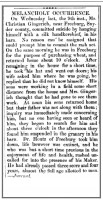
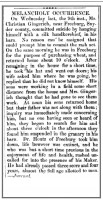
Reminds me of my 3rd great grandfather's death notice in the 1857
Lewistown PA Gazette (below).
[image: Gingerich Christian 1792-1857 copy.jpeg]

Also, in his Find-a-Grave entry, in comments, it notes he used ashes to
write "You work me too hard" on the mantle above the fireplace. I've
emailed the owner of that entry many times asking for the source of the
story, but he never responds.

In the 19th century, they could be very explicit in newspaper reports. It
can be valuable information for descendants. But it is also out there for
anyone else to see.

Walt Bauer

On Wed, Apr 30, 2025 at 1:06 PM Loren Johns via List <
list@maillist.saga-omii.org> wrote:

Wayne:

Your caution surprises me ... which makes me think I should take it
seriously and further ponder the implications of recording something.

I once encountered a death certificate that listed the cause of death as
"nothing serious."

Loren L. Johns
Stuart, Florida

"I will accept no bull from your house." --Ps. 50:9, RSV

On Wed, Apr 30, 2025 at 12:56 PM Wayne Kauffman via List <
list@maillist.saga-omii.org> wrote:

In today's environment I would be very, very careful about mentioning the
cause of death.  There are are enough inheritable genetic conditions which
area a contributing factor in death which one would not want that
information to be public. That could be used in a negative manner against
any descendants of that individual.  One just needs to look to the privacy
controls present at firms such as 23andMe, AncestryDNA, FTNDA to understand
the regulatory and legal controls present on heritable information.  While
one may say that using a generic term such as dementia, breast cancer, or
Parkinsons is OK the assumed potential presence of inherited genes
associated with the condition(s) in offspring could result in unexpected
exclusionary actions by insurance or medical area firms.

Yes, it would be intellectually VERY interesting to trace back the family
tree and look at family siblings passed in order to establish where
specific bad traits were present and where they might be present in current
generations.  Really how many of you would want to know which ancestor(s)
apparently had the APO4e variant which increases the odds of acquiring
Alzheimer's dementia as you age?  [Yes, you can confirm a good number of
items via the existing crop of autosomal tests.]

Before mentioning a cause of death make sure that all descendants are in
agreement that they want that information to be publicized.

Wayne Kauffman

On Wednesday, April 30, 2025 at 12:33:10 PM EDT, Wayne Kauffman <
dna_wayne@yahoo.com> wrote:

In today's environment I would be very, very careful about mentioning the
cause of death.  There are are enough inheritable genetic conditions which
area a contributing factor in death which one would not want that
information to be public. That could be used in a negative manner against
any descendants of that individual.  One just needs to look to the privacy
controls present at firms such as 23andMe, AncestryDNA, FTNDA to understand
the regulatory and legal controls present on heritable information.  While
one may say that using a generic term such as dementia, breast cancer, or
Parkinsons is OK the assumed potential presence of inherited genes
associated with the condition(s) in offspring could result in unexpected
exclusionary actions by insurance or medical area firms.

Yes, it would be intellectually VERY interesting to trace back the family
tree and look at family siblings passed in order to establish where
specific bad traits were present and where they might be present in current
generations.  Really how many of you would want to know which ancestor(s)
apparently had the APO4e variant which increases the odds of acquiring
Alzheimer's dementia as you age?  [Yes, you can confirm a good number of
items via the existing crop of autosomal tests.]

Before mentioning a cause of death make sure that all descendants are in
agreement that they want that information to be publicized.

Wayne Kauffman

On Wednesday, April 30, 2025 at 11:41:35 AM EDT, James G. Hermsen via
List list@maillist.saga-omii.org wrote:

Hoosierly Yours,

James G. Hermsen
8108 Laura Lynne Lane
Indianapolis, IN 46217

317-881-4600 main
317-679-1466 cell

Question Critically, Think Logically, Communicate Clearly, Act
Creatively, Live Ethically.


List mailing list -- list@maillist.saga-omii.org
To unsubscribe send an email to list-leave@maillist.saga-omii.org

List mailing list -- list@maillist.saga-omii.org
To unsubscribe send an email to list-leave@maillist.saga-omii.org


List mailing list -- list@maillist.saga-omii.org
To unsubscribe send an email to list-leave@maillist.saga-omii.org

Reminds me of my 3rd great grandfather's death notice in the 1857 Lewistown PA Gazette (below). [image: Gingerich Christian 1792-1857 copy.jpeg] Also, in his Find-a-Grave entry, in comments, it notes he used ashes to write "You work me too hard" on the mantle above the fireplace. I've emailed the owner of that entry many times asking for the source of the story, but he never responds. In the 19th century, they could be very explicit in newspaper reports. It can be valuable information for descendants. But it is also out there for anyone else to see. Walt Bauer On Wed, Apr 30, 2025 at 1:06 PM Loren Johns via List < list@maillist.saga-omii.org> wrote: > Wayne: > > Your caution surprises me ... which makes me think I should take it > seriously and further ponder the implications of recording something. > > I once encountered a death certificate that listed the cause of death as > "nothing serious." > > Loren L. Johns > Stuart, Florida > ----------------------------------------------------------------------- > "I will accept no bull from your house." --Ps. 50:9, RSV > > > On Wed, Apr 30, 2025 at 12:56 PM Wayne Kauffman via List < > list@maillist.saga-omii.org> wrote: > >> In today's environment I would be very, very careful about mentioning the >> cause of death. There are are enough inheritable genetic conditions which >> area a contributing factor in death which one would not want that >> information to be public. That could be used in a negative manner against >> any descendants of that individual. One just needs to look to the privacy >> controls present at firms such as 23andMe, AncestryDNA, FTNDA to understand >> the regulatory and legal controls present on heritable information. While >> one may say that using a generic term such as dementia, breast cancer, or >> Parkinsons is OK the assumed potential presence of inherited genes >> associated with the condition(s) in offspring could result in unexpected >> exclusionary actions by insurance or medical area firms. >> >> Yes, it would be intellectually VERY interesting to trace back the family >> tree and look at family siblings passed in order to establish where >> specific bad traits were present and where they might be present in current >> generations. Really how many of you would want to know which ancestor(s) >> apparently had the APO4e variant which increases the odds of acquiring >> Alzheimer's dementia as you age? [Yes, you can confirm a good number of >> items via the existing crop of autosomal tests.] >> >> Before mentioning a cause of death make sure that all descendants are in >> agreement that they want that information to be publicized. >> >> Wayne Kauffman >> >> >> On Wednesday, April 30, 2025 at 12:33:10 PM EDT, Wayne Kauffman < >> dna_wayne@yahoo.com> wrote: >> >> >> In today's environment I would be very, very careful about mentioning the >> cause of death. There are are enough inheritable genetic conditions which >> area a contributing factor in death which one would not want that >> information to be public. That could be used in a negative manner against >> any descendants of that individual. One just needs to look to the privacy >> controls present at firms such as 23andMe, AncestryDNA, FTNDA to understand >> the regulatory and legal controls present on heritable information. While >> one may say that using a generic term such as dementia, breast cancer, or >> Parkinsons is OK the assumed potential presence of inherited genes >> associated with the condition(s) in offspring could result in unexpected >> exclusionary actions by insurance or medical area firms. >> >> Yes, it would be intellectually VERY interesting to trace back the family >> tree and look at family siblings passed in order to establish where >> specific bad traits were present and where they might be present in current >> generations. Really how many of you would want to know which ancestor(s) >> apparently had the APO4e variant which increases the odds of acquiring >> Alzheimer's dementia as you age? [Yes, you can confirm a good number of >> items via the existing crop of autosomal tests.] >> >> Before mentioning a cause of death make sure that all descendants are in >> agreement that they want that information to be publicized. >> >> Wayne Kauffman >> >> >> On Wednesday, April 30, 2025 at 11:41:35 AM EDT, James G. Hermsen via >> List <list@maillist.saga-omii.org> wrote: >> >> >> >> >> Hoosierly Yours, >> >> *James G. Hermsen* >> 8108 Laura Lynne Lane >> Indianapolis, IN 46217 >> >> 317-881-4600 main >> 317-679-1466 cell >> >> *Question Critically, Think Logically, Communicate Clearly, Act >> Creatively, Live Ethically.* >> _______________________________________________ >> List mailing list -- list@maillist.saga-omii.org >> To unsubscribe send an email to list-leave@maillist.saga-omii.org >> _______________________________________________ >> List mailing list -- list@maillist.saga-omii.org >> To unsubscribe send an email to list-leave@maillist.saga-omii.org >> > _______________________________________________ > List mailing list -- list@maillist.saga-omii.org > To unsubscribe send an email to list-leave@maillist.saga-omii.org >
JG
James G. Hermsen
Wed, Apr 30, 2025 6:56 PM

I have been asked this question before and have actually consulted with a legal team.  HIPPA only pertains to the living individual having his/her information publicly posted or shared.  Descendants cannot have any legal standing unless the decedent had left explicit instructions mandating the information to be kept confidential.  Posting an cause of death that was already posted in an obituary would not even make it to court if some generation down the line thought it "might" cause him/her difficulties.  That person would have had to make it well known that as to whom the ancestor was and probably their condition.  Besides, with the Obama Care Act, you cannot be denied insurance based upon pre-existing conditions of yourself or your ancestor who lived before you.  Besides a son/daughter only has 50% of the DNA, the grandchildren only 25% DNA, and it keeps dwindling with each generation.
Hoosierly Yours,

James G. Hermsen
8108 Laura Lynne Lane
Indianapolis, IN 46217
317-881-4600 main
317-679-1466 cell
Question Critically, Think Logically, Communicate Clearly, Act Creatively, Live Ethically.

On Wednesday, April 30, 2025 at 02:41:01 PM EDT, Walt Bauer via List <list@maillist.saga-omii.org> wrote:  

Reminds me of my 3rd great grandfather's death notice in the 1857 Lewistown PA Gazette (below). 
Also, in his Find-a-Grave entry, in comments, it notes he used ashes to write "You work me too hard" on the mantle above the fireplace. I've emailed the owner of that entry many times asking for the source of the story, but he never responds.
In the 19th century, they could be very explicit in newspaper reports. It can be valuable information for descendants. But it is also out there for anyone else to see. 
Walt Bauer

On Wed, Apr 30, 2025 at 1:06 PM Loren Johns via List list@maillist.saga-omii.org wrote:

Wayne:
Your caution surprises me ... which makes me think I should take it seriously and further ponder the implications of recording something.
I once encountered a death certificate that listed the cause of death as "nothing serious."
Loren L. JohnsStuart, Florida
-----------------------------------------------------------------------"I will accept no bull from your house." --Ps. 50:9, RSV

On Wed, Apr 30, 2025 at 12:56 PM Wayne Kauffman via List list@maillist.saga-omii.org wrote:

In today's environment I would be very, very careful about mentioning the cause of death.  There are are enough inheritable genetic conditions which area a contributing factor in death which one would not want that information to be public. That could be used in a negative manner against any descendants of that individual.  One just needs to look to the privacy controls present at firms such as 23andMe, AncestryDNA, FTNDA to understand the regulatory and legal controls present on heritable information.   While one may say that using a generic term such as dementia, breast cancer, or Parkinsons is OK the assumed potential presence of inherited genes associated with the condition(s) in offspring could result in unexpected exclusionary actions by insurance or medical area firms.

Yes, it would be intellectually VERY interesting to trace back the family tree and look at family siblings passed in order to establish where specific bad traits were present and where they might be present in current generations.  Really how many of you would want to know which ancestor(s) apparently had the APO4e variant which increases the odds of acquiring Alzheimer's dementia as you age?  [Yes, you can confirm a good number of items via the existing crop of autosomal tests.]
Before mentioning a cause of death make sure that all descendants are in agreement that they want that information to be publicized.
Wayne Kauffman

On Wednesday, April 30, 2025 at 12:33:10 PM EDT, Wayne Kauffman <dna_wayne@yahoo.com> wrote:  

In today's environment I would be very, very careful about mentioning the cause of death.  There are are enough inheritable genetic conditions which area a contributing factor in death which one would not want that information to be public. That could be used in a negative manner against any descendants of that individual.  One just needs to look to the privacy controls present at firms such as 23andMe, AncestryDNA, FTNDA to understand the regulatory and legal controls present on heritable information.   While one may say that using a generic term such as dementia, breast cancer, or Parkinsons is OK the assumed potential presence of inherited genes associated with the condition(s) in offspring could result in unexpected exclusionary actions by insurance or medical area firms.

Yes, it would be intellectually VERY interesting to trace back the family tree and look at family siblings passed in order to establish where specific bad traits were present and where they might be present in current generations.  Really how many of you would want to know which ancestor(s) apparently had the APO4e variant which increases the odds of acquiring Alzheimer's dementia as you age?  [Yes, you can confirm a good number of items via the existing crop of autosomal tests.]
Before mentioning a cause of death make sure that all descendants are in agreement that they want that information to be publicized.
Wayne Kauffman

On Wednesday, April 30, 2025 at 11:41:35 AM EDT, James G. Hermsen via List <list@maillist.saga-omii.org> wrote:  

Hoosierly Yours,

James G. Hermsen
8108 Laura Lynne Lane
Indianapolis, IN 46217
317-881-4600 main
317-679-1466 cell
Question Critically, Think Logically, Communicate Clearly, Act Creatively, Live Ethically.


List mailing list -- list@maillist.saga-omii.org
To unsubscribe send an email to list-leave@maillist.saga-omii.org
_______________________________________________
List mailing list -- list@maillist.saga-omii.org
To unsubscribe send an email to list-leave@maillist.saga-omii.org


List mailing list -- list@maillist.saga-omii.org
To unsubscribe send an email to list-leave@maillist.saga-omii.org


List mailing list -- list@maillist.saga-omii.org
To unsubscribe send an email to list-leave@maillist.saga-omii.org

I have been asked this question before and have actually consulted with a legal team.  HIPPA only pertains to the living individual having his/her information publicly posted or shared.  Descendants cannot have any legal standing unless the decedent had left explicit instructions mandating the information to be kept confidential.  Posting an cause of death that was already posted in an obituary would not even make it to court if some generation down the line thought it "might" cause him/her difficulties.  That person would have had to make it well known that as to whom the ancestor was and probably their condition.  Besides, with the Obama Care Act, you cannot be denied insurance based upon pre-existing conditions of yourself or your ancestor who lived before you.  Besides a son/daughter only has 50% of the DNA, the grandchildren only 25% DNA, and it keeps dwindling with each generation. Hoosierly Yours, James G. Hermsen 8108 Laura Lynne Lane Indianapolis, IN 46217 317-881-4600 main 317-679-1466 cell Question Critically, Think Logically, Communicate Clearly, Act Creatively, Live Ethically. On Wednesday, April 30, 2025 at 02:41:01 PM EDT, Walt Bauer via List <list@maillist.saga-omii.org> wrote: Reminds me of my 3rd great grandfather's death notice in the 1857 Lewistown PA Gazette (below).  Also, in his Find-a-Grave entry, in comments, it notes he used ashes to write "You work me too hard" on the mantle above the fireplace. I've emailed the owner of that entry many times asking for the source of the story, but he never responds. In the 19th century, they could be very explicit in newspaper reports. It can be valuable information for descendants. But it is also out there for anyone else to see.  Walt Bauer On Wed, Apr 30, 2025 at 1:06 PM Loren Johns via List <list@maillist.saga-omii.org> wrote: Wayne: Your caution surprises me ... which makes me think I should take it seriously and further ponder the implications of recording something. I once encountered a death certificate that listed the cause of death as "nothing serious." Loren L. JohnsStuart, Florida -----------------------------------------------------------------------"I will accept no bull from your house." --Ps. 50:9, RSV On Wed, Apr 30, 2025 at 12:56 PM Wayne Kauffman via List <list@maillist.saga-omii.org> wrote: In today's environment I would be very, very careful about mentioning the cause of death.  There are are enough inheritable genetic conditions which area a contributing factor in death which one would not want that information to be public. That could be used in a negative manner against any descendants of that individual.  One just needs to look to the privacy controls present at firms such as 23andMe, AncestryDNA, FTNDA to understand the regulatory and legal controls present on heritable information.   While one may say that using a generic term such as dementia, breast cancer, or Parkinsons is OK the assumed potential presence of inherited genes associated with the condition(s) in offspring could result in unexpected exclusionary actions by insurance or medical area firms. Yes, it would be intellectually VERY interesting to trace back the family tree and look at family siblings passed in order to establish where specific bad traits were present and where they might be present in current generations.  Really how many of you would want to know which ancestor(s) apparently had the APO4e variant which increases the odds of acquiring Alzheimer's dementia as you age?  [Yes, you can confirm a good number of items via the existing crop of autosomal tests.] Before mentioning a cause of death make sure that all descendants are in agreement that they want that information to be publicized. Wayne Kauffman On Wednesday, April 30, 2025 at 12:33:10 PM EDT, Wayne Kauffman <dna_wayne@yahoo.com> wrote: In today's environment I would be very, very careful about mentioning the cause of death.  There are are enough inheritable genetic conditions which area a contributing factor in death which one would not want that information to be public. That could be used in a negative manner against any descendants of that individual.  One just needs to look to the privacy controls present at firms such as 23andMe, AncestryDNA, FTNDA to understand the regulatory and legal controls present on heritable information.   While one may say that using a generic term such as dementia, breast cancer, or Parkinsons is OK the assumed potential presence of inherited genes associated with the condition(s) in offspring could result in unexpected exclusionary actions by insurance or medical area firms. Yes, it would be intellectually VERY interesting to trace back the family tree and look at family siblings passed in order to establish where specific bad traits were present and where they might be present in current generations.  Really how many of you would want to know which ancestor(s) apparently had the APO4e variant which increases the odds of acquiring Alzheimer's dementia as you age?  [Yes, you can confirm a good number of items via the existing crop of autosomal tests.] Before mentioning a cause of death make sure that all descendants are in agreement that they want that information to be publicized. Wayne Kauffman On Wednesday, April 30, 2025 at 11:41:35 AM EDT, James G. Hermsen via List <list@maillist.saga-omii.org> wrote: Hoosierly Yours, James G. Hermsen 8108 Laura Lynne Lane Indianapolis, IN 46217 317-881-4600 main 317-679-1466 cell Question Critically, Think Logically, Communicate Clearly, Act Creatively, Live Ethically. _______________________________________________ List mailing list -- list@maillist.saga-omii.org To unsubscribe send an email to list-leave@maillist.saga-omii.org _______________________________________________ List mailing list -- list@maillist.saga-omii.org To unsubscribe send an email to list-leave@maillist.saga-omii.org _______________________________________________ List mailing list -- list@maillist.saga-omii.org To unsubscribe send an email to list-leave@maillist.saga-omii.org _______________________________________________ List mailing list -- list@maillist.saga-omii.org To unsubscribe send an email to list-leave@maillist.saga-omii.org